If you’ve ever watched high-volume distribution centers during peak hours, you know it’s organized chaos at its finest. Forklifts zip through aisles, pallets stack up faster than you can count, and somewhere in all that motion, every single piece of freight needs accurate dimensions. That’s where smart dimensioning practices make the difference between smooth operations and costly bottlenecks.
Finding the Sweet Spot for Your System
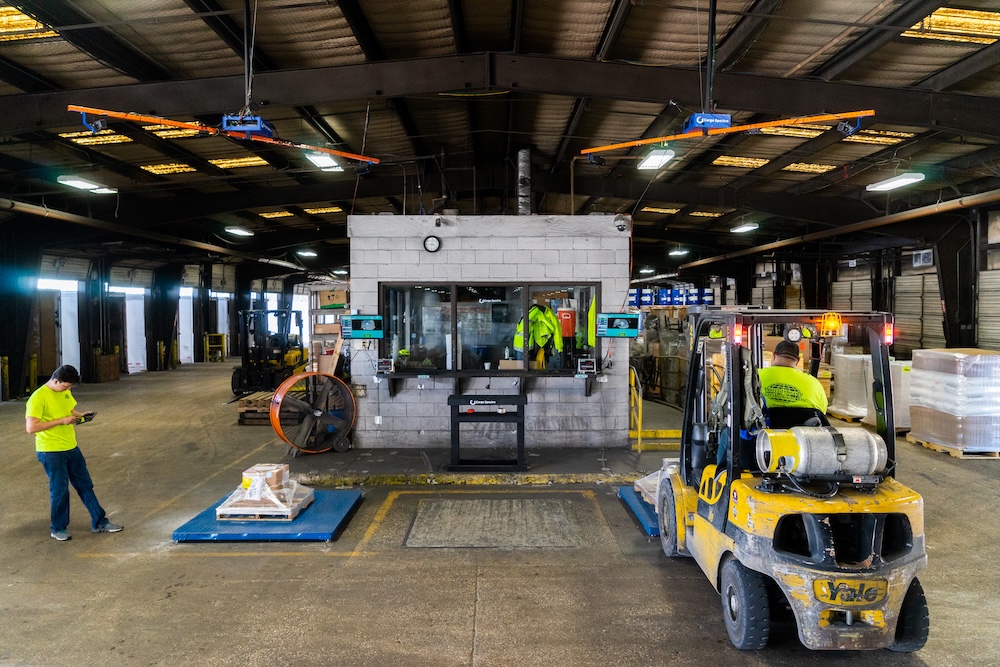
Here’s what we’ve learned after installing hundreds of Cargo Spectre systems in high-volume distribution centers: location is everything. You want your Roll-Thru Dimensioner sitting right where freight naturally flows, maybe between your receiving dock and storage area, or at that busy cross-dock intersection where everything converges.
Think about it like placing a toll booth. You wouldn’t put it on a side road where drivers have to detour. Same principle here. When forklift operators can scan pallets during their normal routes, you’ve already won half the battle. We’ve seen facilities process 500 scans per hour, but only when the system sits in the right spot.
Getting the Speed Just Right
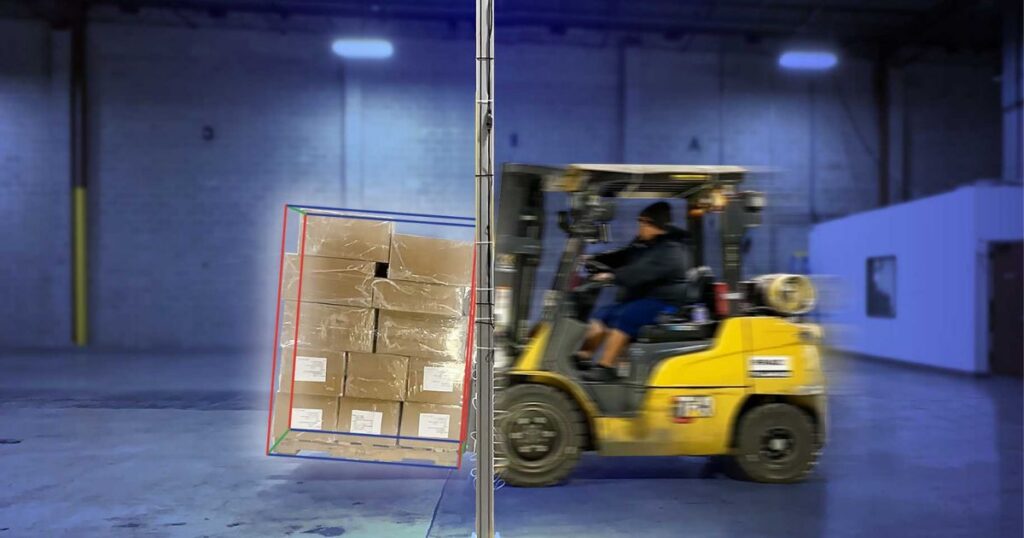
One thing about Cargo Spectre pallet dimensioners that surprises new operators? You don’t have to stop. Our Roll-Thru technology scans freight while it’s moving, which feels almost magical the first time you see it. But here’s the trick: consistency beats speed every time.
We tell operators to cruise through at a steady 3-5 mph. Think of it like driving through an automatic car wash. Too fast and you might miss a spot. Too slow and you’re holding up the line. Many warehouses add simple floor markings or LED lights to guide operators into that sweet spot. It’s a small touch that makes a big difference.
Making Data Work Smarter, Not Harder
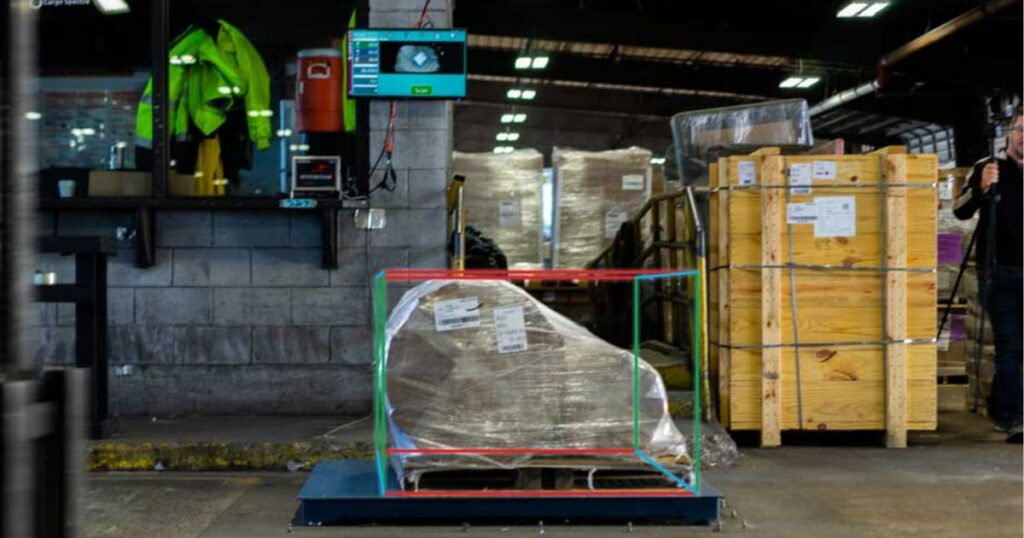
Capturing dimensions is only step one. The real dimensioning best practices for high-volume distribution centers kick in when you automate what happens next. Set up Spectre Link to fire that data straight to your warehouse management system. No manual entry, no fat-finger errors, just instant information where it needs to go.
Smart facilities create rules for different scenarios. Oversized freight? Route it to special handling. Pushing carrier limits? Flag it before it becomes a problem. Time-sensitive shipment? Send it through the express lane. Every decision automated is a decision that can’t go wrong.
Training That Sticks
Let’s be honest: warehouse workers are creatures of habit. When you’ve been eyeballing pallet dimensions for years, trusting a machine feels weird at first. Good training addresses this head-on.
Show operators how to present loads properly (centered on the forks, nothing dangling off the sides). Explain why keeping the scan zone clear matters. Most importantly, help them understand that our NTEP-certified accuracy means they can trust the numbers. No more walking around pallets with a tape measure “just to be sure.”
Using Analytics Like a Crystal Ball
Spectre Hub turns your dimensional data into actionable insights. Maybe you notice Tuesday afternoons always show more re-scans. Dig deeper and you might find that’s when new operators typically start their shifts. Or perhaps certain product types consistently measure differently than expected.
These patterns tell stories. Listen to them. One distribution center discovered their afternoon shift was moving 15% faster through the dimensioner, but with 3% more re-scans. A quick refresher on approach speed solved the problem.
Handling the Curveballs
In high-volume distribution centers, sometimes weird stuff happens. Shrink-wrapped pallets with loose ends flapping. Oddly shaped machinery. That one customer who always ships things in bizarre configurations.
Build exception protocols before you need them. Create automatic workflows for oversized items. Set up alerts for anything unusual. Our 24/7 support team can help configure these based on your specific challenges. Trust me, it’s better to plan for weirdness than react to it.
Keeping High-Volume Distribution Centers Running Smooth
Cargo Spectre systems are workhorses, but even workhorses need occasional attention. The good news? Maintenance takes minutes, not hours.
Daily walk-bys to check for obvious issues. Weekly performance reviews using your analytics. Monthly sensor cleaning (literally just wipe them down). Quarterly check-ins with our remote support team. This simple routine prevents 99% of potential issues.
Growing Without the Growing Pains
Success brings volume, and volume brings challenges. When it’s time to scale up, think strategically. Maybe you add a second dimensioning point where outbound freight converges. Perhaps you create dedicated lanes for different freight types.
The beauty of modular systems? You can expand without starting over. Each new component integrates with your existing setup, building on what already works.
Making It All Worth It
When these dimensioning best practices come together in high-volume distribution centers, the results speak for themselves. We’re talking about cutting dock-to-stock time in half. Achieving 99.9% accuracy. Ending those painful carrier disputes over dimensions. Gaining complete visibility into every piece of freight.
But here’s what really matters: Your team spends less time measuring and more time moving. Your data becomes trustworthy. Your operation runs like a Swiss watch, even during the crazy times.
Ready to transform your distribution center? Let’s talk about how Cargo Spectre can help you implement these practices and take your operation to the next level.